The whole trip, explained properly.
Around nine in ten of our clients travel from North America or Europe. This is everything we would tell you on the phone, written down: the firearm permit, the shooting standard we ask for, what to bring, and how your trophies get home.
Bringing your own rifle, or hiring one of ours
Rifle hire is available on request, so travelling without a firearm is a perfectly normal way to do this. If you would rather bring your own, we prepare and pre-submit your SAPS 520 so the permit is issued at the firearm office while you are still in the arrivals queue.
What you may bring
Up to four firearms, no two of the same calibre, and up to 200 rounds of ammunition per firearm. No semi-automatic or fully automatic rifles, and no handguns without a separate motivation.
What we need from you
A completed SAPS 520 (we send you the form and fill in our side), a certified copy of your passport photo page, your proof of ownership or export permit, your flight itinerary and an invitation letter which we issue.
How far in advance
Six weeks is comfortable. Four is possible. Under three weeks and we would rather you used one of our camp rifles than risked the permit not being ready.
US hunters specifically
File a CBP Form 4457 with US customs before you leave, so you can prove the rifle was yours when you re-enter. Do it at your departure airport or an inland customs office; it takes ten minutes and saves an argument on the way home.
Rifle hire
Available on request, in calibres suited to African game. Plenty of our clients now travel without a rifle by choice.
Getting your shooting right
The single biggest predictor of a good safari is not your rifle, your calibre or your fitness. It is whether you can shoot off standing sticks.
Practise standing, on sticks
Almost every shot in Africa is taken standing, off a tripod, between 80 and 200 yards. If all your practice has been from a bench or prone, the first opportunity will feel very different. Build a set of sticks and shoot from them for a month.
The standard we ask for
Three shots inside a nine-inch paper plate at 100 yards, standing, off sticks, in under a minute. Nothing more exotic than that. If you can do it, you will be fine on anything on our plains-game list.
Bullet choice matters more than calibre
A controlled-expansion bullet from a .270 will out-perform a cup-and-core from a .300 magnum on eland every time. Bring a premium bonded or monolithic bullet and do not experiment with a new load two weeks before you fly.
You will shoot in on arrival
Every hunter, without exception, on the range before the first hunt. Scopes move in cargo holds. It is better to find out on paper.
What to pack
Less than you think. Laundry is done daily, so three days of clothing covers a two-week safari.
- Muted green, khaki and brown in a light, quiet fabric — skip the camouflage, nobody here wears it
- Boots you have already walked 50 kilometres in, plus a second pair in case the first gets wet
- A warm jacket and a beanie: winter mornings on an open vehicle are genuinely cold
- Gaiters, and long trousers rather than shorts — the thorns here are not decorative
- A wide-brimmed hat, high-factor sunscreen and lip balm
- Good binoculars. This is the one item worth spending real money on
- A soft rifle case for the field, a hard case for the flight
- Any prescription medication in its original labelled packaging
Getting your trophies home
Your PH prepares everything in the field and delivers it to a registered taxidermist. From there you have two routes, and the right one depends on whether you already have a taxidermist you trust at home.
Dip and pack
Raw trophies are treated to meet import regulations, crated and shipped to your own taxidermist at home. Typically six to ten months from the end of your safari. Cheaper up front, and you keep control of the finished mounts.
Full South African taxidermy
Mounted in South Africa and shipped finished. Twelve to eighteen months, and the work is world class at roughly half what the same mount costs in the United States. The saving usually more than covers the crating.
What it costs
Budget roughly $1,200 to $2,500 for crating and freight on a five-animal plains-game safari, plus your customs broker at the other end. This is billed by the taxidermist and the shipping agent directly, not by us.
Import permits
Plains game needs no CITES permit into the United States or the EU. Species on CITES Appendix I or II, including leopard and hippo, need both export and import permits arranged before the hunt. We will not book those species against permits we do not already hold.
Photographs either way
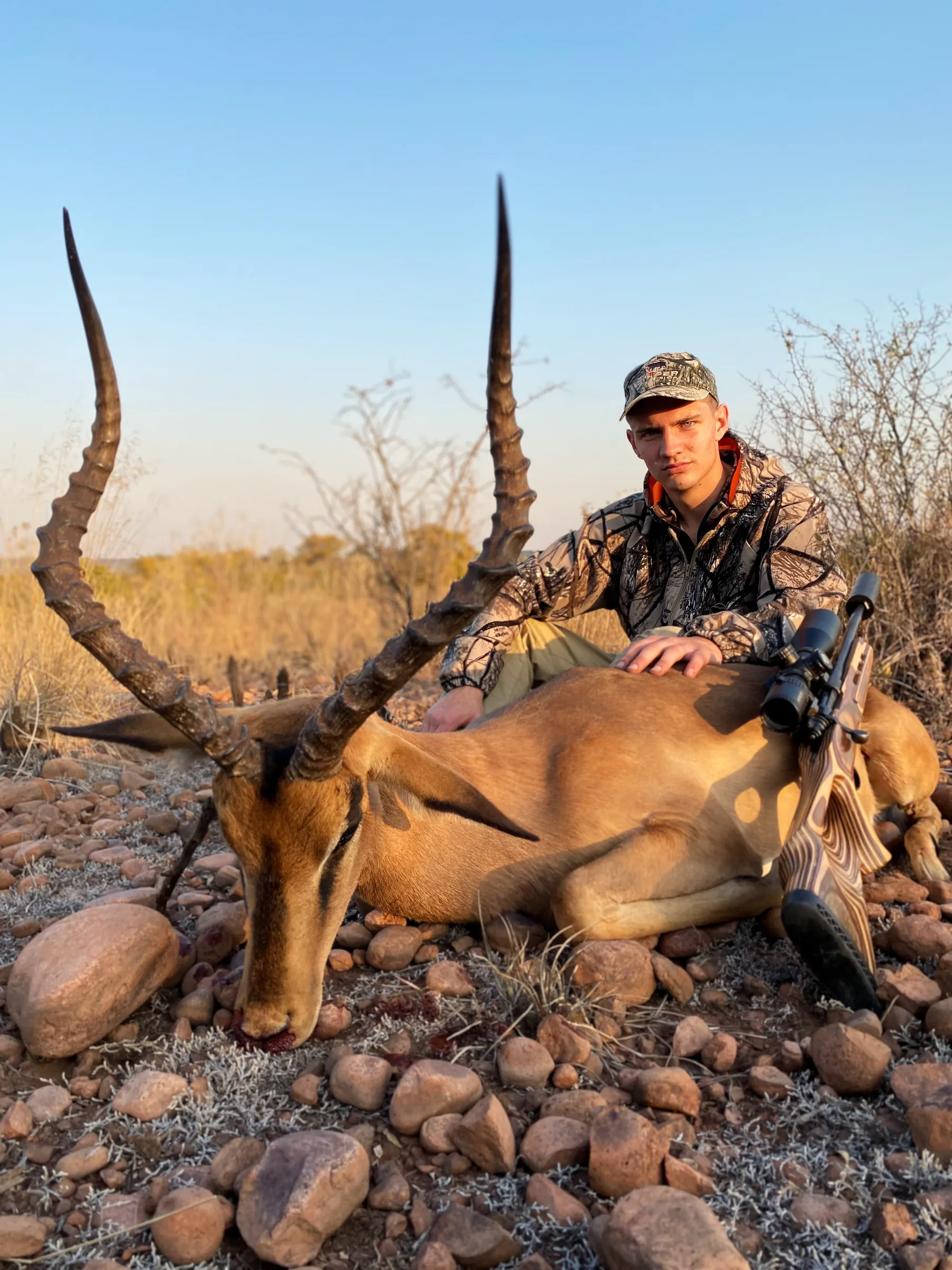
We photograph every animal properly in the field, in good light, with the animal presented respectfully. Those pictures reach you before you have landed at home.
Gratuities
Tipping is customary and genuinely appreciated, and nobody will ever ask you for it. These are the ranges our clients typically work to, given at the end of the safari.
- Professional hunter: $100 to $150 per hunting day
- Tracker: $20 to $30 per hunting day
- Skinner: $15 to $25 per hunting day
- Camp staff, as a pooled tip: $150 to $300 for the week
- Cash is easiest, and we will help you split it fairly
This guide is written for planning purposes and reflects our understanding of current requirements. Immigration, firearm and CITES regulations change, and the responsibility for meeting them rests with you. Confirm anything critical with your own authorities, and ask us if you are unsure — we deal with this every season.
Ask it before you book, not after.
There is no question about an African safari we have not been asked, and no question we would rather you left unanswered.